India's Trade Pivot & Stable Rates: 4 Smart Car Buys Right Now
With the RBI anchoring rates at 5.25%, inflation inching to 5.1%, and Southeast Asia's supply chains under geopolitical strain, the smartest car buys in July 2026 turn out to be the ones built closest to home.

A quiet but consequential shift is under way in global trade this week. Southeast Asia — long the world's preferred manufacturing buffer between Washington and Beijing — is facing a strategic supply-chain dilemma, torn between US and Chinese trade interests in ways that are already reshaping factory investment decisions across the region. Closer to home, the RBI Monetary Policy Committee's July 6 decision to hold the repo rate at 5.25% while trimming India's FY27 GDP growth forecast to 6.6% and raising its inflation projection to 5.1% completes a macro picture worth reading carefully before your next showroom visit. India's own GST collections and auto sales through June 2026 have remained resilient — evidence that domestic demand is holding — but the global crosswinds are real, and they are already beginning to shape prices, waiting periods, and loan economics in the Indian car market.
Start with the number that matters most to a buyer financing a car: the repo rate at 5.25%. Car loan rates at most banks sit in a predictable band above that floor, so EMIs today are as stable as they have been in recent quarters, and there is no near-term signal of a surprise hike given the RBI's own cautious growth forecast. What does quietly threaten your monthly ownership budget is that 5.1% inflation projection. Tyres, service labour, spare parts, and insurance premiums track broader price indices, so the real cost of running a car is rising even when the EMI stays flat. That dynamic makes fuel efficiency one of the most financially meaningful criteria in your buying decision right now — not a nice-to-have, but a genuine rupee saving on every tank.
The Southeast Asia supply-chain squeeze is the slower-moving variable that will quietly influence Indian car prices over the next 12-18 months. A meaningful share of automotive components — semiconductors, wiring harnesses, certain battery cells — enters Indian assembly plants through Southeast Asian supply chains. If those chains are disrupted or rerouted as manufacturers navigate the US-China trade split, component costs climb and some of that increase eventually reaches the showroom sticker. Completely Built Unit (CBU) imports face compounded risk: they absorb both global manufacturer repricing and rupee movements in real time. The rupee's modest recovery this week — supported by RBI intervention and a dip in global oil prices — offers short-term comfort, but it is not a structural hedge. The contrast with domestically oriented manufacturers is sharp: when Anand Mahindra publicly set his company into an accelerated-investment posture specifically to capitalise on global uncertainty, the logic was precisely this — India-assembled vehicles backed by domestic supplier networks are structurally more price-stable than imports over any meaningful time horizon.
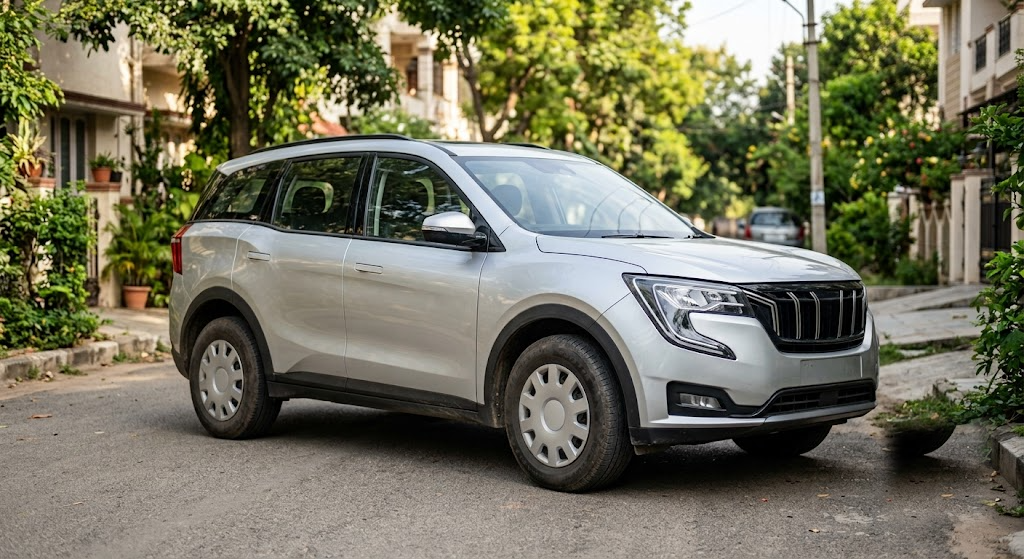
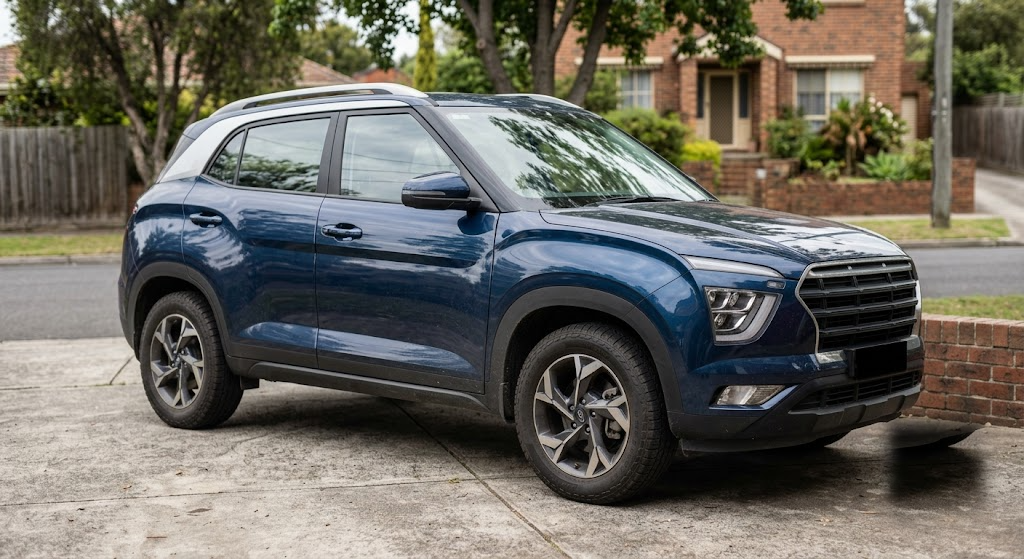
For buyers shopping in the Rs 10-25 lakh bracket, the macro environment clearly favours India-assembled models with strong local content. The [Mahindra XUV700](/cars/mahindra-xuv700) (from Rs 13.99 lakh, up to 16.5 kmpl) is manufactured at Mahindra's Nashik and Chakan plants with a deep domestic supply base — about as insulated from import-driven cost pressures as a modern SUV gets. The [Hyundai Creta](/cars/hyundai-creta) (from Rs 11 lakh, 17.4 kmpl) and [Kia Seltos](/cars/kia-seltos) (from Rs 10.99 lakh, 17.0-20.7 kmpl), both assembled at Indian plants, carry similarly low supply-chain exposure. If running costs are a primary concern — and with inflation at 5.1% they should factor heavily — the [Maruti Suzuki Baleno](/cars/maruti-suzuki-baleno) (from Rs 6.65 lakh, 22.35 kmpl) is among the most fuel-efficient hatchbacks in its class and is entirely locally produced. The [Tata Nexon](/cars/tata-nexon) (from Rs 8 lakh, 17.4 kmpl petrol / 23.2 kmpl diesel, with a CNG variant available) adds a further running-cost lever and comes with Tata's expanding domestic service network.
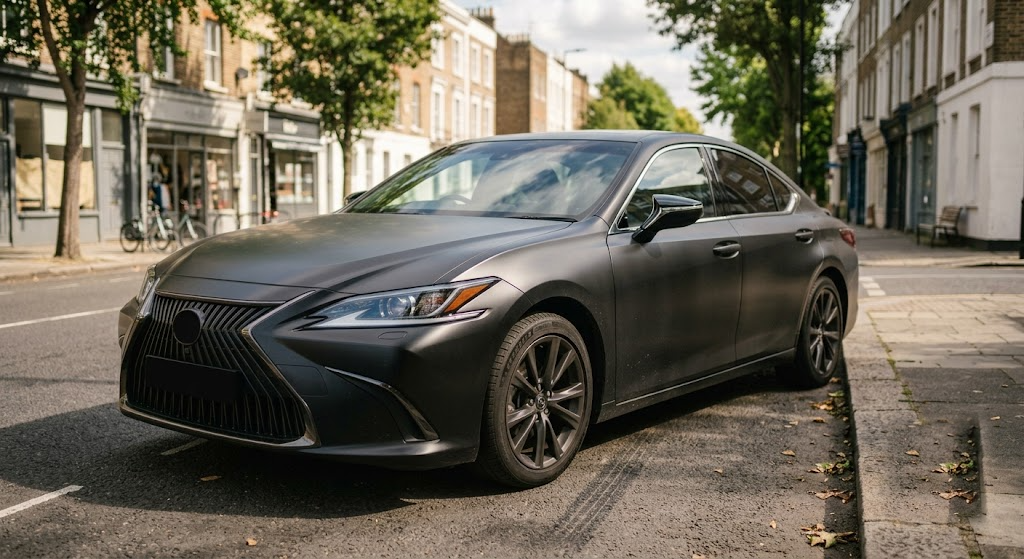
Luxury CBU buyers face a meaningfully different calculus. Products like the [Lexus ES](/cars/lexus-es) (from Rs 64.20 lakh, 22.4 kmpl on its petrol-hybrid powertrain) and the [Mercedes-Benz C-Class](/cars/mercedes-benz-c-class) (from Rs 60 lakh) are priced against global benchmarks that can shift independently of the Indian market and independently of the rupee's day-to-day movement. Last week's sharp price hike on the Toyota Corolla Cross HEV in Pakistan — driven by currency and import-duty recalibration — is a pointed reminder of how quickly CBU sticker prices can move once a manufacturer updates its regional cost model. The rupee's current firmness helps at the margin, but luxury buyers waiting for a more comfortable moment may find that the best window was already now. If an import is on your shortlist, the current rate environment and the rupee's recent stability represent a reasonable entry point rather than a reason to hold off.
The July 2026 car-buying playbook distils to three principles. First, use the rate window: with the repo at 5.25% and no near-term hike signalled, financing conditions are predictable — lock in your loan now rather than hope for something better later. Second, weight fuel efficiency seriously: at a projected 5.1% inflation, running costs are a live financial variable, and every extra kilometre per litre is money recovered at the pump every month. Third, lean toward India-assembled models where medium-term price stability matters: the Mahindra XUV700, Hyundai Creta, Tata Nexon, and Maruti Suzuki Baleno each offer strong domestic supply-chain insulation at different price points across the market. For CBU luxury products, the direction of travel in global trade makes acting sooner the more defensible choice. India's fundamentals remain intact — the domestic auto market is still growing — but the buyers who read the macro signals and move on them will be better placed than those who wait for perfect clarity that global trade rarely provides.