India's Growth-Inflation Squeeze: 4 Smart Car Buys for July
India's RBI just froze rates while simultaneously cutting its growth forecast and raising its inflation outlook — a specific combination of conditions that makes some car purchases significantly smarter than others right now.

When the Reserve Bank of India's Monetary Policy Committee held the repo rate at 5.25% on July 11 and simultaneously trimmed its FY27 GDP growth projection to 6.6% while raising its inflation forecast to 5.1%, it sent a nuanced signal — not a crisis alarm, but a clear sign that India's economy is navigating a squeeze between moderating momentum and sticky prices. This coincides with two other developments worth tracking closely: the formal notification of India-UK automotive tariffs and quota volumes under the bilateral trade framework, and Mahindra's very public declaration of an "attack mode" expansion strategy amid global uncertainty. Together, these three developments create an unusually legible map for Indian car buyers trying to time their next purchase.
The repo rate hold is the most immediately useful piece of news for anyone financing a car. Auto loan rates from major lenders have broadly settled in the 8.5–10% range, and with the RBI signalling no imminent hike, EMIs on mainstream models remain predictable. On the [Honda City](/cars/honda-city) (from ₹11.9 lakh, 18.4 kmpl), financed over five years, the difference between today's rate environment and a 50-basis-point increase works out to roughly ₹500–600 per month — a real number for most salaried buyers. The caution, however, is that with inflation running at 5.1%, the MPC retains every reason to move rates upward if price pressures worsen in the second half of FY27. The stability window exists, but it has a shelf life.
The India-UK trade deal's automotive chapter, formally notified this week with specific tariff rates and quota volumes, is generating genuine excitement among premium car buyers — but it demands carefully calibrated expectations. The tariff rate quota mechanism grants reduced import duty only on a fixed annual volume of UK-assembled vehicles; once that quota is exhausted, standard duties apply in full. For buyers weighing the [Mercedes-Benz C-Class](/cars/mercedes-benz-c-class) (from ₹60 lakh, 18.5 kmpl) or the [Volvo XC60](/cars/volvo-xc60) (from ₹67.9 lakh, 13.2 kmpl), the duty relief is structurally real but quota-limited, and dealers are likely to absorb savings unevenly across variants in the near term. A more realistic horizon for meaningful on-road price reductions on UK-origin CBU imports is 2027 or later, once the quota mechanics are better understood and volumes stabilise. Locally assembled vehicles — which represent the overwhelming majority of Indian car purchases — sit entirely outside this mechanism.
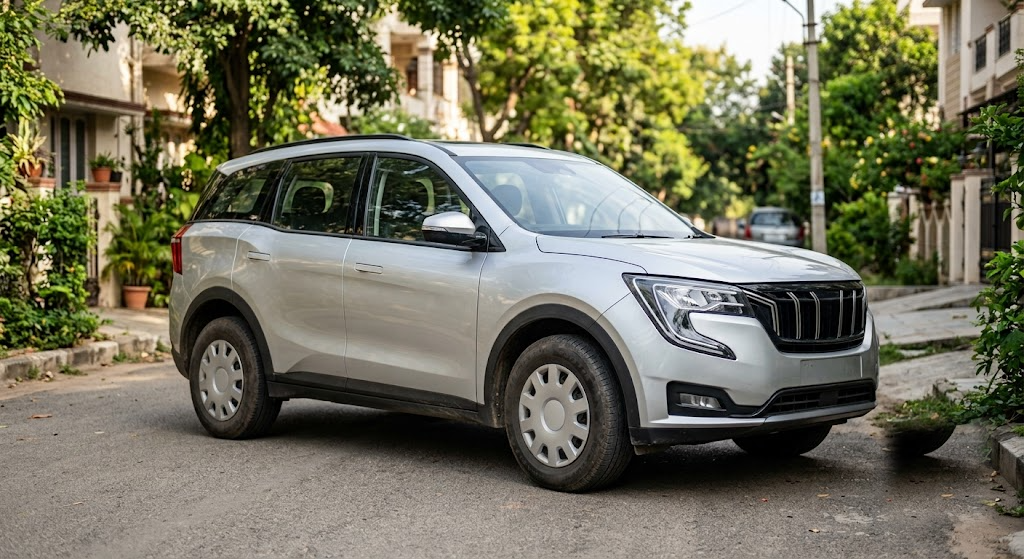
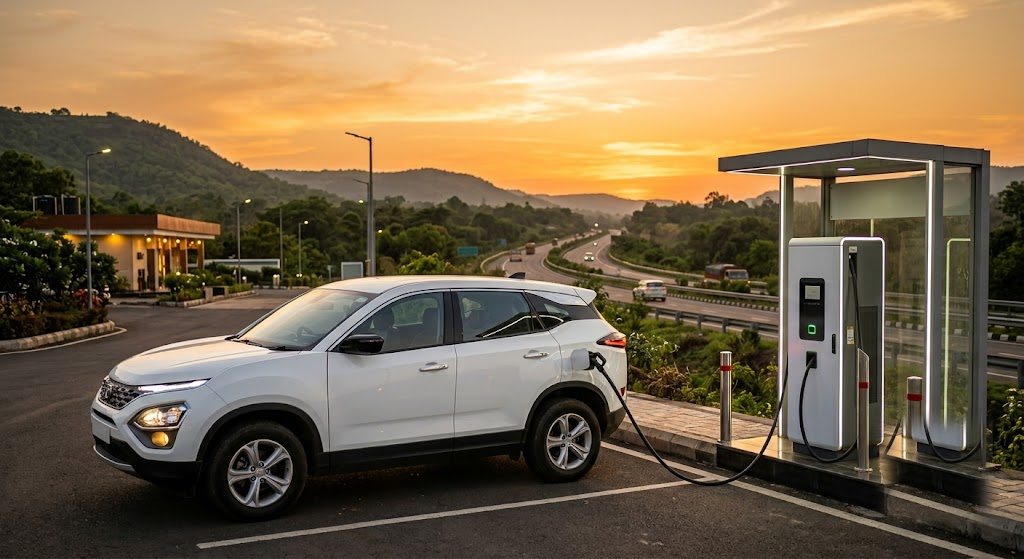
This is precisely where Mahindra's domestic aggression becomes a contextually smart buying signal. The company's "attack mode" strategy is a direct bet on India's demand fundamentals holding even as global headwinds multiply, and for buyers it translates into an expanding lineup of India-built products with minimal exposure to import duty volatility or rupee depreciation risk on the sticker price. The [Mahindra BE 6](/cars/mahindra-be-6) (from ₹18.9 lakh, approximately 490 km ARAI range) is designed, developed, and assembled in India — UK quota mechanics and rupee movements are largely irrelevant to its pricing trajectory. The [Mahindra XUV700](/cars/mahindra-xuv700) (from ₹13.99 lakh, 16.5 kmpl diesel) sits in the same position: domestically insulated, feature-rich, and available without the quota uncertainty that clouds premium imports. With GDP growth moderating to 6.6%, some automakers may also see mild inventory softening on slower-moving variants — creating genuine room to negotiate on exchange bonuses, extended warranties, and accessory packages.
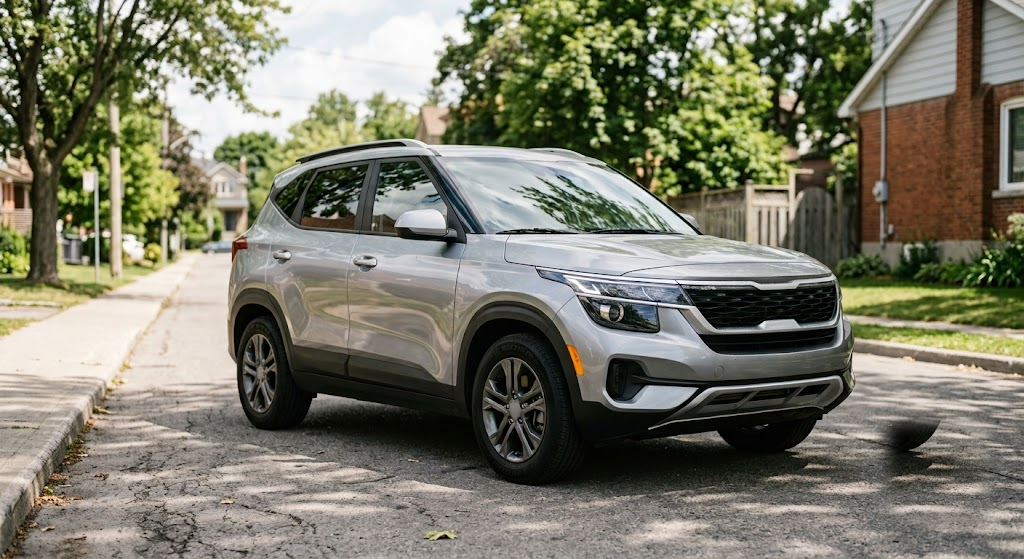
Running costs add another layer to the calculation. With inflation at 5.1%, even relatively stable fuel prices carry a structural floor, and the efficiency gap between vehicles compounds meaningfully over a five-year ownership cycle. The [Toyota Innova Hycross](/cars/toyota-innova-hycross) petrol-hybrid (from ₹19.3 lakh, approximately 21.1 kmpl) and the [Kia Seltos](/cars/kia-seltos) diesel (from ₹10.99 lakh, up to approximately 20.7 kmpl on the diesel variant) both translate efficiency into hard monthly savings. On a typical 1,500 km per month usage pattern, a vehicle returning over 20 kmpl saves approximately ₹3,000–4,000 per month compared to one returning around 12 kmpl — a difference that accumulates to a meaningful sum across a five-year ownership period at current fuel prices, and one that grows more valuable if pump prices edge upward later in FY27.
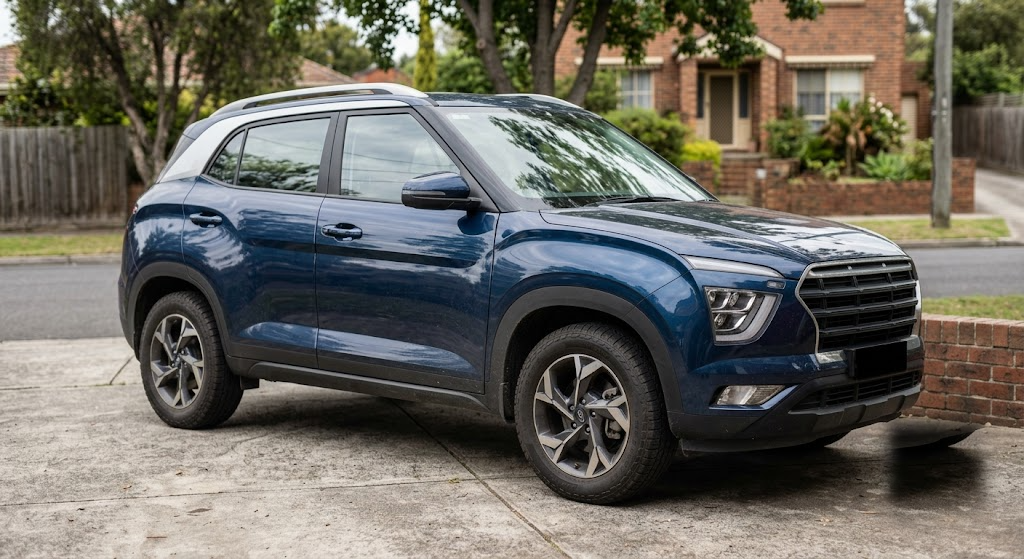
The practical takeaway for July 2026 is this: the macro environment favours buyers who act on domestically manufactured vehicles now rather than waiting on trade deal price drops that are quota-capped and timeline-uncertain. EMI conditions are as stable as they have been in two years, demand moderation in select segments creates negotiating leverage on add-ons, and the inflation trajectory argues for locking in today's prices rather than deferring. If your shortlist includes a UK-origin or European CBU import, track how quickly the annual quota is consumed before you commit — the savings may arrive considerably later than advertised. For the majority of buyers in the ₹8–20 lakh bracket, the [Hyundai Creta](/cars/hyundai-creta) (from ₹11 lakh, approximately 17.4 kmpl), the [Kia Seltos](/cars/kia-seltos), or the [Mahindra XUV700](/cars/mahindra-xuv700) represent the most defensible purchases in an economy that is still growing — just growing at a pace that rewards disciplined, well-timed buying over speculation.