GST Hike on Hybrids: 4 Smarter Buys for July 2026
A GST hike on hybrid vehicles, a steady repo rate, and a new India-UK trade quota have all landed in the same week — here is what Indian car buyers should do next.
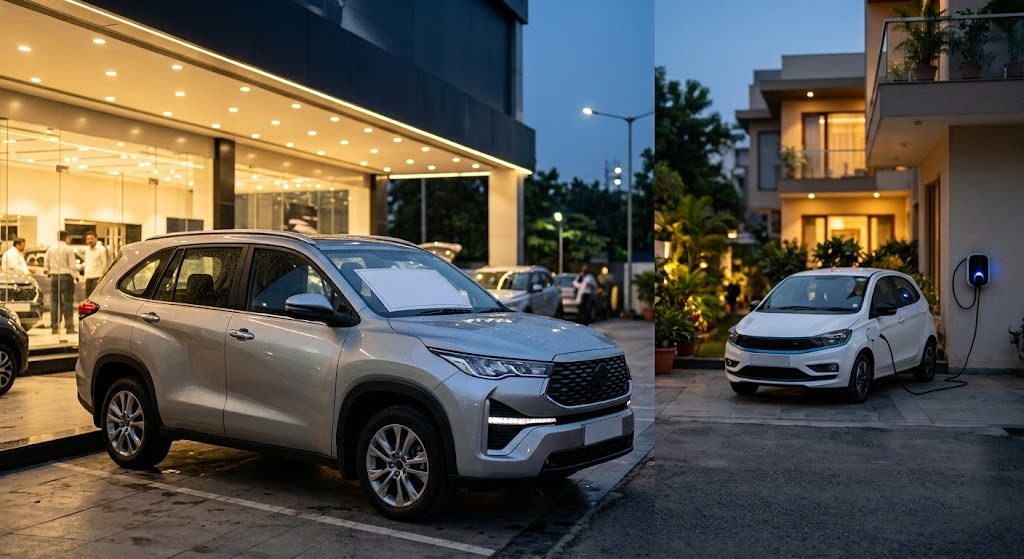
Three economic signals have converged on India's car market within the past 72 hours, and the most consequential one landed today. A GST revision effective July 12 has pushed the effective tax rate on hybrid vehicles upward — not a dramatic jump, but enough to shift on-road prices by meaningful amounts across every segment from compact sedans to luxury SUVs. This arrives just days after the Reserve Bank of India's Monetary Policy Committee held the repo rate steady at 5.25% on July 10, simultaneously trimming its FY27 GDP growth forecast to 6.6% and raising its inflation estimate to 5.1%. That same day, the government formally notified tariff rate quotas under the India-UK free trade agreement, opening a limited-volume channel for British-built vehicles to enter India at reduced import duties. Taken together, these three developments describe a market in selective flux: borrowing costs are stable, some import prices may soften at the margins, and the hybrid running-cost arithmetic has just changed.
The GST revision cuts most visibly into the hybrid segment's core value proposition — that you pay a modest premium over a petrol car and recover it through better fuel economy over time. The [Toyota Innova Hycross](/cars/toyota-innova-hycross) hybrid, starting from ₹19.3 lakh ex-showroom and rated at 21.1 kmpl, was already India's most compelling full-hybrid MUV; the revised tax burden lifts that base price further, stretching payback periods for buyers upgrading from a diesel Innova Crysta. The [Honda City](/cars/honda-city) petrol-hybrid (from ₹11.9 lakh base, 18.4 kmpl) is equally affected — a car that already required careful cost-of-ownership math now demands an even longer ownership horizon to justify the hybrid premium over its petrol-only sibling. At the luxury end, the [Lexus ES](/cars/lexus-es) Petrol Hybrid (₹64.2 lakh ex-showroom, 22.4 kmpl) faces compounding pressure: the GST adjustment adds to a sticker price that is already sensitive to currency movements given its CBU import status. Across all three, the revised pricing does not make these cars bad — it simply makes the break-even calculation less forgiving.
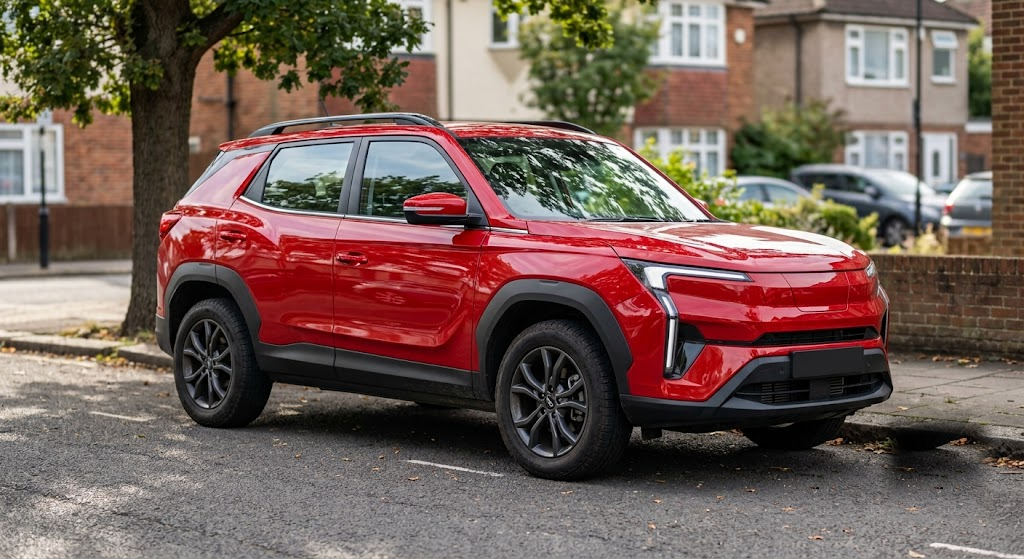
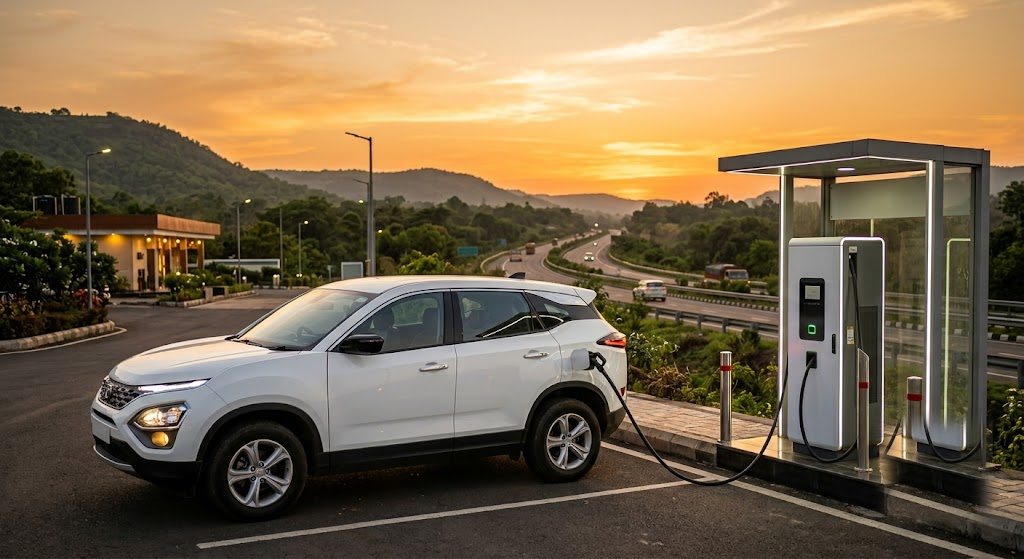
The significant irony is that pure electric vehicles sit entirely outside this GST revision. EVs are taxed at 5% GST, a rate that has not changed, and that differential has just become more pronounced. Mahindra — which Anand Mahindra described this week as operating in "attack mode" amid global uncertainty — has the [Mahindra BE 6](/cars/mahindra-be-6) priced aggressively at ₹18.9 lakh, a figure that now sits uncomfortably close to some hybrid entry points that have moved upward. With a claimed 490 km range on the 59 kWh battery (ARAI) and a charging infrastructure that is maturing rapidly in Tier 1 and Tier 2 cities, the BE 6 offers compelling running-cost savings stacked on top of the structural tax advantage. The [Tata Nexon EV](/cars/tata-nexon-ev) at ₹12.99 lakh and 465 km claimed range (MIDC) is an even sharper proposition at a lower price point: its segment now has genuine breathing room from the hybrid options that previously competed for the same undecided buyer. If home or workplace charging is feasible for your situation, the case for choosing electric over hybrid has strengthened materially this week.
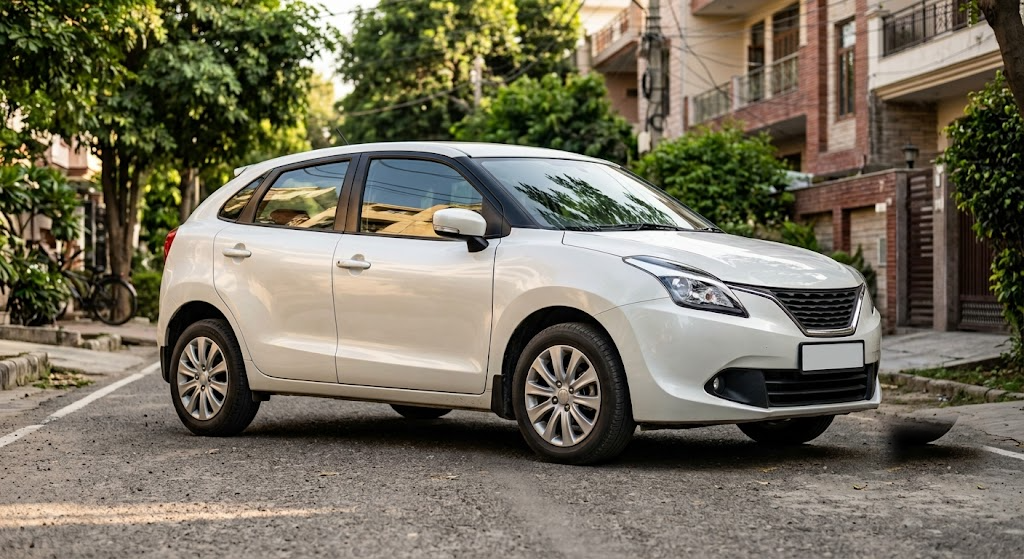
For buyers who are not yet ready to commit to full electric — whether due to apartment charging constraints, long highway commutes, or simply unfamiliarity with EV ownership — the answer lies in high-efficiency petrol alternatives that have absorbed no price changes this week and carry no import or tariff exposure whatsoever. The [Maruti Suzuki Baleno](/cars/maruti-suzuki-baleno), at ₹6.65 lakh ex-showroom and 22.35 kmpl claimed, remains India's most fuel-efficient mass-market petrol hatchback; it is built domestically in Manesar and carries zero tariff or tax-adjustment risk going forward. The [Hyundai Verna](/cars/hyundai-verna) petrol sedan (₹11 lakh, 20.6 kmpl) delivers near-hybrid efficiency in a premium-feeling package with no hybrid surcharge attached. In the compact SUV space, the [Kia Seltos](/cars/kia-seltos) petrol (from ₹10.99 lakh, up to 20.7 kmpl in DCT configuration) offers segment-leading feature density at a price entirely unaffected by today's revision. With the repo rate held at 5.25% and the RBI signalling no urgency to move in either direction, EMI costs on these cars are as predictable as they have been all year — a ₹10 lakh loan over 7 years costs roughly ₹15,000–₹16,000 per month at current market lending rates.
The India-UK tariff rate quota adds an important asterisk specifically for premium and luxury buyers. The newly notified TRQ framework allows a defined volume of British-built vehicles to enter India at reduced duty levels — potentially relevant for Jaguar Land Rover product and MINI vehicles assembled in Oxford. However, several layers separate the duty reduction from what a buyer actually pays at a showroom: TRQ slots are allocated to importers who must apply and qualify; the duty saving must then be passed on as a formal price revision; and dealers must update their quotes accordingly. This chain typically takes weeks to months. The [Mini Cooper](/cars/mini-cooper), currently at ₹44.9 lakh, is one model where a modest on-road improvement may eventually materialise under the quota — but "eventually" carries real ambiguity at this stage. Buyers should track announcements from brand India offices over the next four to six weeks before banking on TRQ savings in their purchase decision.
The practical buyer's playbook for July 2026 is more focused than the surrounding noise might suggest. Hybrid buyers should re-run the cost-of-ownership numbers with revised ex-showroom prices before signing anything — the payback calculus has shifted and some hybrid variants may no longer be the clear winners they were even a month ago. EV buyers have an unusually clear signal right now: GST structure, domestic brand competition, and improving infrastructure are all aligned in their favour, and Mahindra's attack-mode pricing posture makes this a genuine buyer's market rather than a premium niche. For buyers who want efficient, low-risk petrol options, the Baleno-Verna-Seltos bracket offers strong value with stable financing — the RBI's growth downgrade to 6.6% suggests rates are more likely to hold or ease than to rise in the near term. Act on what is certain today rather than waiting for what might happen at the UK TRQ counter.