SIAM's 40% Duty Demand: The Car Buyer's Playbook for July 2026
SIAM's lobbying for 40% import duties on commercial vehicles signals a hardening trade environment — here is exactly what that means for on-road prices, your EMI, and which models to buy right now.

India's automotive lobby fired a protectionist salvo on July 7, with SIAM formally urging the government to raise import duties on commercial tractors and prime movers to 40% — a significant escalation from current levels. The timing is deliberate: Indian passenger vehicle sales just posted a 25% year-on-year surge in June, powered by Maruti Suzuki, Tata Motors, and Mahindra, and the domestic industry wants to lock in that momentum by making imported competition structurally more expensive. The policy backdrop reinforces the mood: the Reserve Bank of India's Monetary Policy Committee held the repo rate at 5.25% on July 6, trimmed its FY27 GDP growth outlook to 6.6%, and nudged its inflation forecast up to 5.1%. Add the easing of West Asia tensions — which Delhi School of Economics director Ram Singh noted in late June reduces the downside risk to India's growth forecast — and the picture that emerges is of a resilient but cautious economy, with an auto sector actively seeking protective cover. For car buyers, this intersection of trade policy, interest rates, and booming domestic demand has concrete implications.
SIAM's immediate target is commercial tractors and prime movers — the heavy haulers at the backbone of India's freight network — but the ripple effects reach passenger car buyers through at least two channels. First, if imported commercial vehicles become significantly more expensive to procure, logistics and freight costs across supply chains could inch upward, eventually feeding into assembly costs for cars that rely on imported sub-assemblies. Second, and more strategically significant, the policy direction signals a broader hardening of India's import duty environment. This is most consequential for vehicles that arrive as completely built-up (CBU) units from abroad. The [Mercedes-Benz C-Class](/cars/mercedes-benz-c-class) (from ₹60 lakh) and the [Mercedes-Benz E-Class](/cars/mercedes-benz-e-class) (from ₹78.5 lakh) are imported as finished vehicles in India, and any future revision to passenger CBU duties — following the same protectionist logic SIAM is now applying to the commercial segment — would translate directly into higher sticker prices before dealer margins or GST are even applied. Buyers eyeing premium CBU models should treat this as a tail risk worth factoring into their decision timeline.
For mainstream buyers, the more immediately actionable variable is the cost of financing. The RBI's decision to hold the repo rate at 5.25% means car loan interest rates at most banks and NBFCs remain anchored in the 8.5–10% range — stable and predictable. On a 5-year loan for the [Honda City](/cars/honda-city) (from ₹11.9 lakh, 18.4 kmpl petrol), a buyer at 9% interest is looking at a monthly EMI of approximately ₹24,700. That number is not moving dramatically anytime soon. The complication is the 5.1% inflation forecast: household budgets are under real pressure, which is precisely why the RBI held rather than cut. Buyers sitting on the sidelines awaiting a rate reduction to unlock meaningfully cheaper EMIs may need to recalibrate — a cut later in FY27 is possible but not guaranteed in the immediate quarters, and the cost of waiting is ongoing inflation eroding purchasing power.
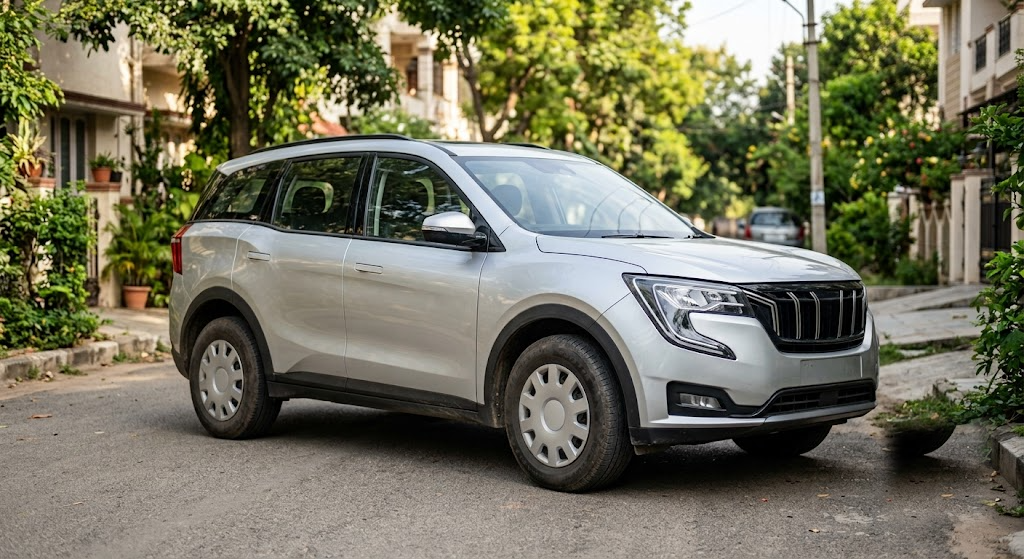
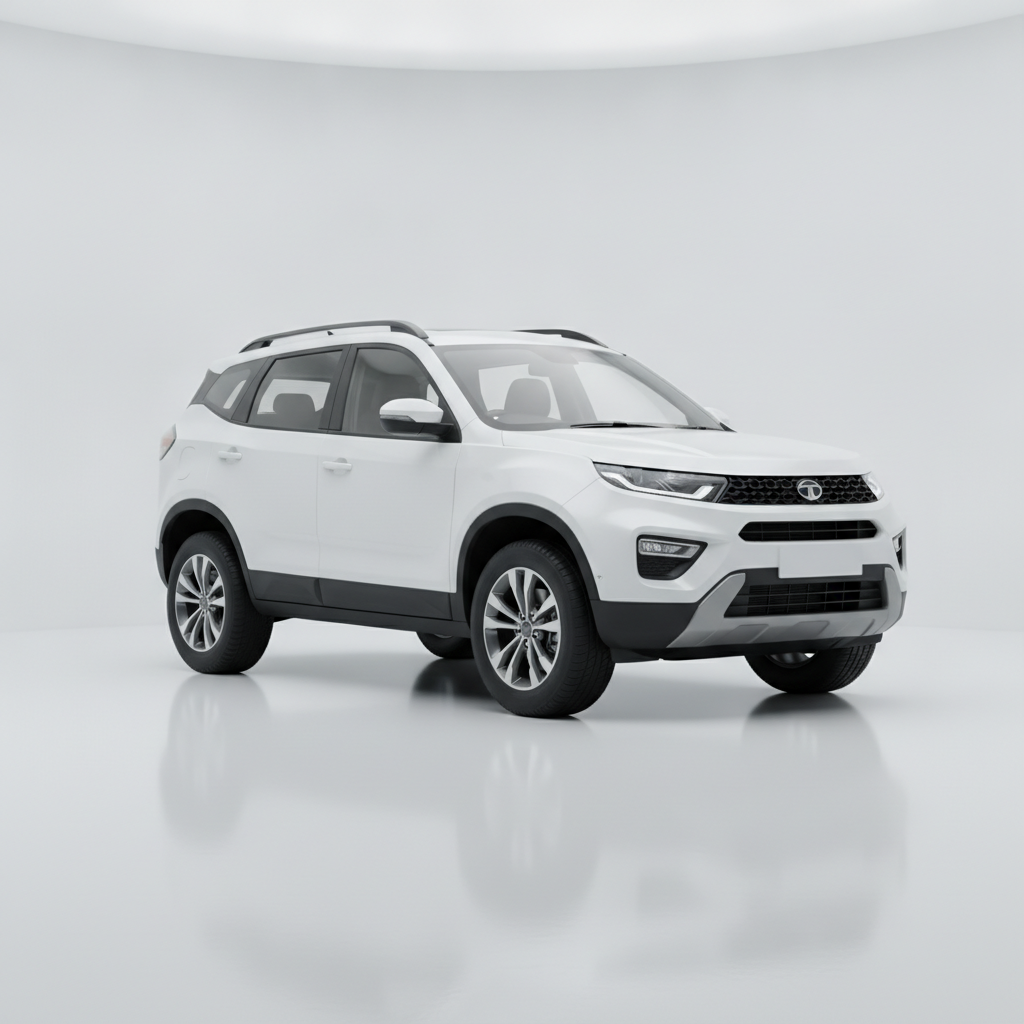
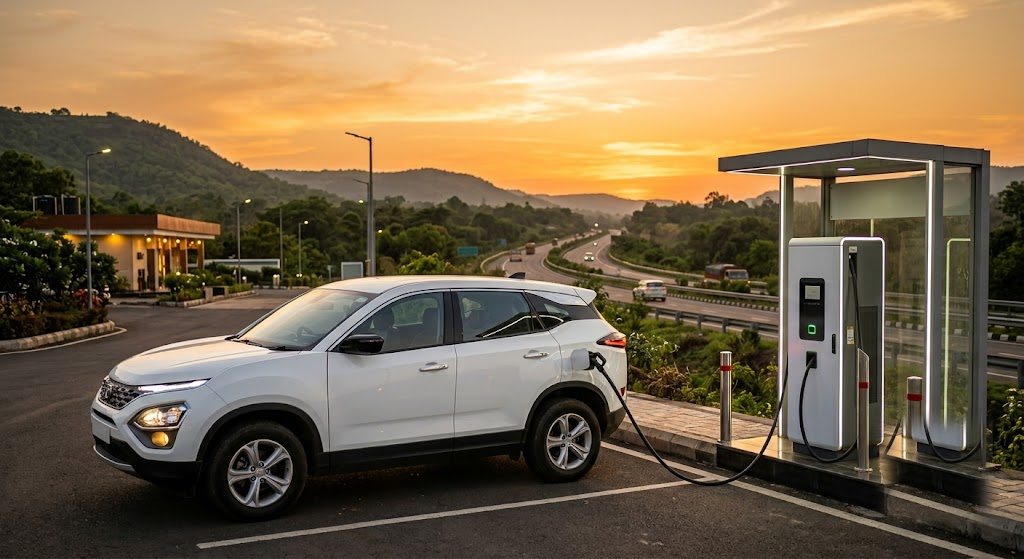
Against this backdrop, the strongest case is for domestically assembled vehicles from India's leading manufacturers. Mahindra chairman Anand Mahindra has publicly announced the company is in "Attack Mode" — investing aggressively in product and capacity despite global uncertainty, a confidence backed by June's buoyant sales data. The [Mahindra XUV700](/cars/mahindra-xuv700) (from ₹13.99 lakh, 16.5 kmpl) and [Mahindra Scorpio N](/cars/mahindra-scorpio-n) (from ₹13.99 lakh) are manufactured in India and therefore structurally insulated from import duty volatility at any level of the tariff schedule. The [Tata Harrier](/cars/tata-harrier) (from ₹15.49 lakh, diesel, 16.8 kmpl) offers a similarly tariff-proof proposition from a brand that posted strong June numbers. Critically, all three benefit from rapidly scaling service networks — a practical advantage when high sales volumes mean workshops are investing in technicians and parts inventory. These are not fallback choices; they are precisely what the market is rewarding right now.
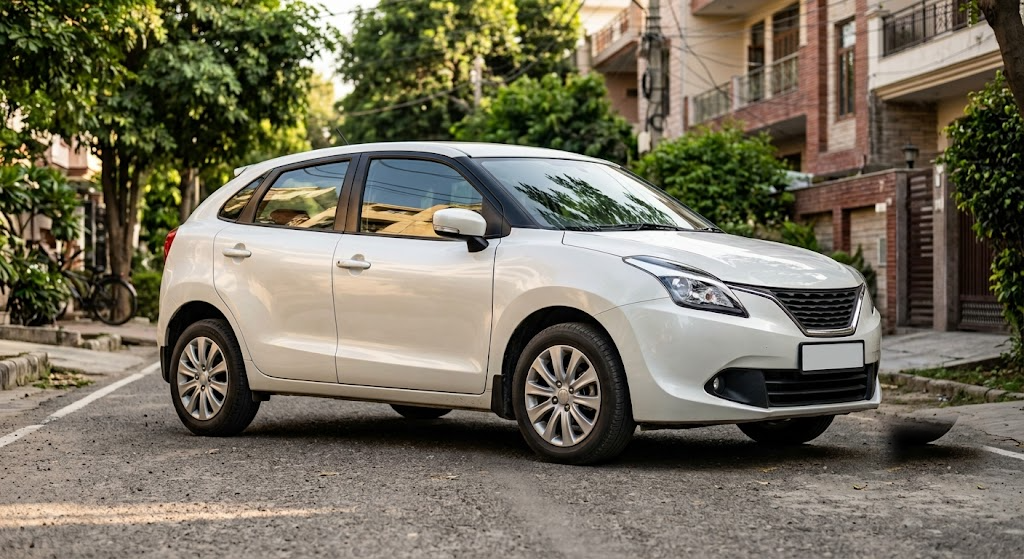
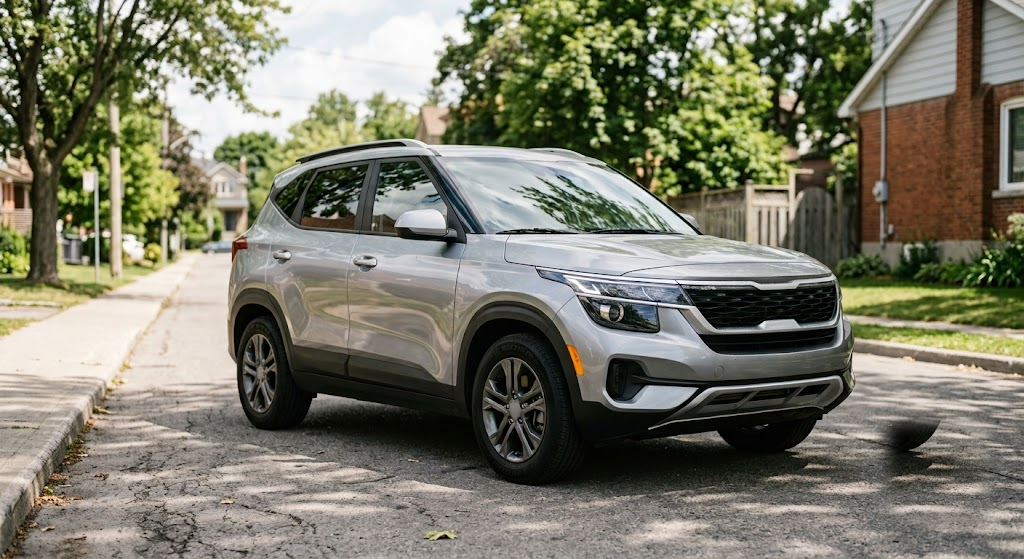
Fuel efficiency remains a live variable even as geopolitical risks moderate. With West Asia tensions easing and a crude oil spike looking less likely than it did earlier in the year, the immediate urgency around pump prices has reduced — but with CPI inflation at 5.1%, every rupee saved on fuel has real household value across the ownership lifecycle. The [Maruti Suzuki Baleno](/cars/maruti-suzuki-baleno) (from ₹6.65 lakh, 22.35 kmpl) remains one of the most fuel-efficient hatchbacks in India and is fully domestically produced, combining running economy with tariff insulation. For buyers stretching toward the compact SUV bracket, the [Hyundai Creta](/cars/hyundai-creta) (from ₹11 lakh, 17.4 kmpl petrol) and [Kia Seltos](/cars/kia-seltos) (from ₹10.99 lakh, diesel up to 20.7 kmpl) both deliver strong running economy, are locally assembled, and carry resale values that protect buyers if macroeconomic conditions soften further.
The practical playbook for July 2026 is to act with clarity rather than wait for perfect conditions. Locally assembled models from Mahindra, Tata, Maruti, Hyundai, and Kia occupy a structural sweet spot: insulated from the tariff volatility that SIAM is actively lobbying into motion, backed by stable EMIs for as long as the RBI holds at 5.25%, and supported by high-volume dealer and service networks that are scaling in line with booming sales. For buyers seriously considering a CBU luxury import — a Mercedes or a [Lexus ES](/cars/lexus-es) (from ₹64.2 lakh, Petrol Hybrid, 22.4 kmpl) — there is no announced duty hike on passenger cars today, but the policy wind is clearly blowing toward protecting domestic production. If such a purchase sits within your 6–9 month horizon, advancing the timeline is the lower-risk call. For everyone else, the answer is straightforward: buy a well-built domestic model now, lock in today's loan rate, and let the tariff politics unfold from the comfort of your new car.